
Doing more with less: efficiency, resilience, and impact in a changing textile reuse landscape
As we step into a new year, it’s important to pause and reflect on what 2025 meant for Planet Aid. The past year was defined by efficiency, adaptability, and resilience.
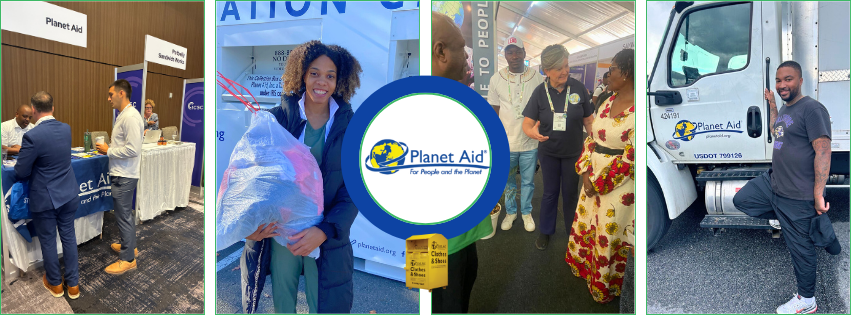
In 2025, Planet Aid intentionally streamlined operations to navigate a challenging economic landscape. Competition for used clothing increased—a positive signal that more textiles are being diverted from the U.S. waste stream for reuse—while resale prices declined and the cost of collecting donations rose. Against this backdrop, Planet Aid focused on doing more with less: operating smarter, strengthening partnerships, and maximizing environmental and community impact per pound collected.
Thanks to the generosity of donors and the commitment of site hosts, schools, churches, and municipalities, Planet Aid continued to deliver meaningful environmental and social outcomes—proving that sustainability is as much about efficiency as it is about scale.
A Year of Measurable Impact Through Efficiency
In 2025, Planet Aid's more than 200 employees collected 65.65 million pounds of donated clothes and shoes for reuse, diverting these textiles from U.S. landfills and incinerators. Every pound collected reflected careful resource management, optimized routes, and a commitment to ensuring donated textiles continued to serve people and the planet.
Textile Collection by Region
- New England: 24.99 million pounds
- Maryland Region (DC, MD, VA, PA, DE): 16.69 million pounds
- Ohio: 10.38 million pounds
- Western Pennsylvania: 7.05 million pounds
- New Jersey: 3.57 million pounds
- Upstate New York: 1.5 million pounds
- Kansas City: 1.47 million pounds
This impact was made possible through a strong and visible donation network that included:
- 5,486 donation sites
- 7,972 donation bins (Planet Aid’s iconic yellow bins)
- 63 donation centers (Planet Aid’s larger, more efficient donation drop off, made from refurbished shipping containers and equipped with solar-powered lighting and security cameras
Together, these locations made donating used clothing and shoes easy, convenient, and secure for communities across our service areas—while allowing Planet Aid to operate a leaner, more efficient collection network.
Supporting Schools, Churches, and Community Causes—Even in a Lean Year
Planet Aid’s work doesn’t stop at environmental impact. Even as operational costs rose and textile markets softened, Planet Aid helped partners raise $3.46 million in 2025 by hosting donation bins and centers.
Among the 5,486 donation sites in 2025 were:
- 295 schools
- 233 churches
- Hundreds of other community organizations and nonprofits
Many hosts directed proceeds to causes such as the Alzheimer’s Association of America, Boys & Girls Clubs, Humane Societies, Youth Foundations, Food Pantries, YMCAs, Learning Centers, Youth Athletic Associations, and American Legion posts. In a challenging year, these funds provided dependable support for community-based services—demonstrating the resilience of reuse-based fundraising.
Corporate Responsibility Made Easy—With Smarter Infrastructure
In 2025, Planet Aid continued to expand its presence in shopping centers and commercial spaces, working with partners such as Phillips Edison, Kimco Realty, and J.C. Bar. These collaborations helped make textile donation more accessible while offering businesses a practical way to meet their corporate responsibility and sustainability goals.
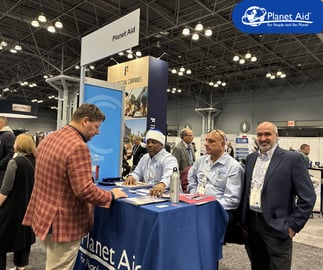
Our modern donation centers—designed with solar-powered lighting and video monitoring—provided a secure, visible, and environmentally responsible option for diverting usable clothing from landfills, while reducing operational inefficiencies and improving site reliability. Planet Aid also participated in several ICSC Conferences, strengthening relationships with businesses interested in creating positive environmental and social impact.
Thought Leadership in Textile Reuse During a Shifting Market
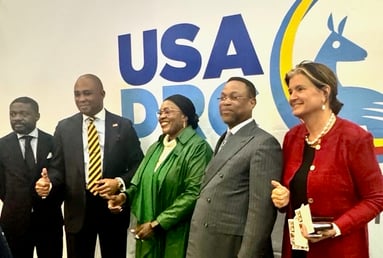
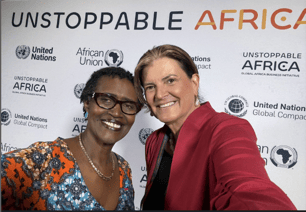
With nearly 30 years of experience, Planet Aid remained an active voice in the reuse and recycling conversation throughout 2025—particularly as the textile reuse sector faced lower resale prices, higher collection costs, and increased competition for donated goods. We shared insights, data, and best practices across panels, conferences, and media platforms to help advance sustainable solutions in the textile sector.
Highlights included participation in events such as the NYSAR and NRC Conferences, appearances on the Where We Buy podcast, and a National Stewardship Alliance Council LinkedIn Live discussion featuring Planet Aid CEO Fred Olsson.
We also launched another season of our Sustainable Solutions with Planet Aid podcast, continuing to spotlight sustainability leaders and innovative approaches to reducing waste and strengthening communities.
Listeners can find episodes on Planet Aid’s website, YouTube, Spotify, Apple Podcasts, Substack, and other major podcast platforms.
A Large Donation with Local Impact
.png?width=302&height=253&name=Praying%20for%20Pennies%20-VS%20Donation-1%20(3).png)
In October 2025, Planet Aid received a generous donation from I Support the Girls, consisting of nearly 20,000 Victoria’s Secret bras, pants, tops, and swimsuits. Planet Aid coordinated distribution to ensure the items reached individuals and families in genuine need.
Local charities, churches, nonprofits, and shelters—including Success in Style, United Way, City of Refuge, Paying for Pennies, Chrysalis House, Frederick Rescue Mission, and Shabach Ministries of Praise—visited Planet Aid’s Elkridge, Maryland, warehouse to collect these essential items for their clients. Collaborating with nonprofit partners to honor the intent of this donation was a meaningful highlight of the year.
One Door Closes ... Another Door Opens
In September 2025, the Planet Aid Thrift Store in Rockville, Maryland, closed after serving the community since 2019. While this chapter has come to an end, Planet Aid is looking ahead with excitement.
Plans are underway for a new, innovative retail concept in Maryland launching in 2026. The Loop by Planet Aid will build on our commitment to reuse, sustainability, and community engagement. More details will be shared in the coming weeks.
Looking Ahead: Sustainable Impact Through Efficiency
Reflecting on 2025, Planet Aid’s staff and management are grateful for the generosity of donors, the trust of partners, and the dedication of communities that made this impact possible.
In a year shaped by economic pressure and market shifts, Planet Aid proved that efficiency, adaptability, and strong partnerships can sustain environmental and social impact. As we move into 2026, Planet Aid remains committed to responsible textile reuse—ensuring that donated clothing continues to reduce waste, support communities, and contribute to a more sustainable future for people and the planet.