
Listen to the whole article on the media player below.
What if you had the comfort of knowing that nothing in your closet would ever go out of style? It would make getting dressed a whole lot easier. Wouldn't it? If you've ever stood in front of a closet stuffed with clothes and still felt like you had "nothing to wear," a capsule wardrobe might be the move for you. This minimalist approach to dressing—first articulated in publications in the 1940s, named by designer Susan Faux in the 1970s, and given shape and form by Donna Karan in the 1980s— has been regaining popularity.
What Is a Capsule Wardrobe?
A capsule wardrobe is a small, curated collection of clothing items that all work together to create multiple outfits. Instead of owning dozens of pieces that rarely get worn, you focus on versatile basics. In 1985, Donna Karan introduced Seven Easy Pieces—a line geared toward working women and the growing need for flexible wardrobes for busy lifestyles. The concept centered around a sleek bodysuit, a tailored jacket, and other interchangeable assets. This concept still shapes capsule/minimalist wardrobes today.
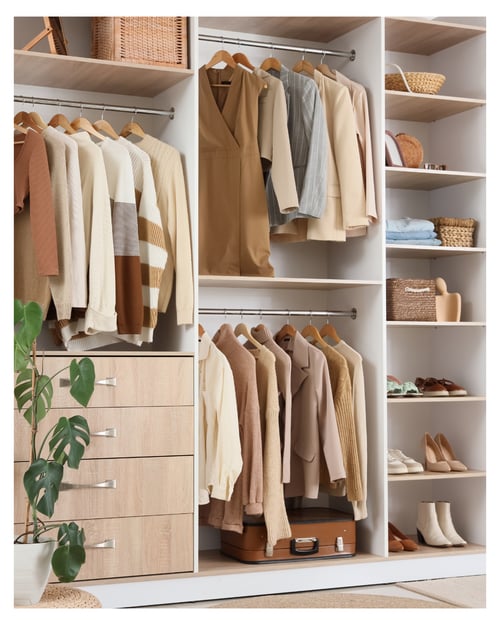 As times have changed, the capsule wardrobe's mission remains the same, but the pieces have evolved. Think well-fitting jeans, neutral tops, a couple of blazers, and a handful of shoes that can be mixed and matched endlessly. A capsule wardrobe saves money, reduces decision fatigue, and helps you feel more confident in timeless pieces you can wear through any season.
How Many Items Should You Have?
There's no "official" number, but most capsule wardrobe guides suggest between 30 and 40 items for a season, including tops, bottoms, dresses, outerwear, and shoes (though shoes and accessories are sometimes counted separately). Lifestyles dictate the range. Some minimalists go as low as 25 items, while others prefer up to 50 if they need more variety for work, workouts, or social events.
The goal isn't to hit an exact number — it's to be intentional. Every piece should earn its spot in your closet by being comfortable, functional, and easy to pair with other items you own.
Do You Need to Get Rid of Your Old Clothes?
This is one of the biggest questions people have when starting a capsule wardrobe. The answer is: not necessarily. You don't have to purge your entire closet to enjoy the benefits of capsule dressing. In a July 2026 Modern Minimalism article, organizing expert Elle Penner urges readers to pull the pieces they already wear and love and set them aside. She says, "By creating your capsule first, you skip the big, intimidating declutter. You’ll start sooner, gain clarity about what you love and why, and naturally begin to see your personal style take shape."
 Emotionally Attached
Donating extra clothes is always an option, but all non-capsule items don't have to be given away. Many people choose to store off-season or sentimental items in a separate bin or closet space rather than donating everything. This way, your everyday closet stays streamlined and easy to navigate, leaving you access to clothes for special occasions, seasonal changes, or pieces you're not ready to part with emotionally.
That said, if an item hasn't been worn in over a year, doesn't fit well, or doesn't match your current style, it might be worth donating, selling, or repurposing it. The key is being honest with yourself about what you actually wear versus what's just taking up space.
Building Your Capsule with Thrifted and Existing Items
One of the best parts of building a capsule wardrobe is that you don't need to buy everything new. In fact, combining thrifted finds with pieces you already own is one of the most budget-friendly and sustainable ways to do it.

-
Start with what you have: Before shopping, go through your closet and pull out pieces that are neutral, well-made, and versatile. These become the foundation of your capsule.
-
Fill in the gaps with thrifted pieces: Once you know what's missing — like a good blazer or a pair of black trousers — head to a local thrift store like theLoop by Planet Aid. Thrifting is a fantastic way to find quality basics at a fraction of the cost, and it keeps clothing out of landfills.
-
Mix textures and eras thoughtfully: Thrifted items often come from different decades or brands, and that's what makes these finds so unique. Look for pieces that complement the color palette and style you're going for, rather than clashing with your existing pieces.
-
Alter when needed. A trip to a tailor can transform a thrifted find into an upscaled treasure fit specifically for you, plus it is often cheaper than buying new.
The Bigger Benefits
Beyond saving money, a capsule wardrobe can make getting dressed easier, minimize laundry, and encourage intentional consumption habits. When paired with thrifting, it also supports a more sustainable fashion cycle — reducing waste while still allowing you to express your personal style.
Start small, use what you already have, add secondhand pieces where it makes sense, and let your closet evolve naturally over time.