
Every year, World Environment Day on June 5 and World Food Safety Day on June 7 remind us of a simple truth: people cannot thrive without a healthy planet, and food security is impossible without safe and sustainable food systems.
World Environment Day 2026 calls for urgent action beyond reducing emissions, including restoring ecosystems, protecting biodiversity, managing water responsibly, improving soil health, and reshaping the systems that sustain everyday life. At the same time, World Food Safety Day 2026, under the theme “From burden to solutions – safe food everywhere,” highlights that foodborne diseases still affect millions each year, even though they are largely preventable through practical actions across the food chain. These are not separate issues, and addressing these challenges requires more than technical solutions. It requires people to take action.
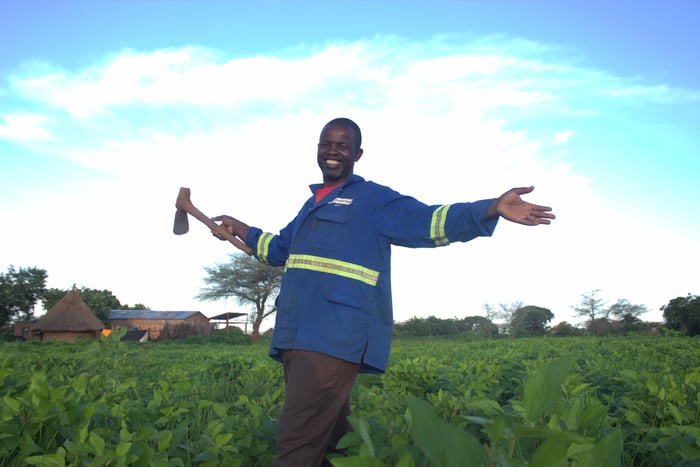
Safe food begins long before food reaches a market, shop, or kitchen. It starts with healthy soils, clean water, resilient farming systems, safe storage, good hygiene, and informed food choices. Climate change is already disrupting all of these foundations through droughts, floods, heat stress, erratic rainfall, and environmental degradation, placing additional pressure on smallholder farmers and rural communities worldwide.
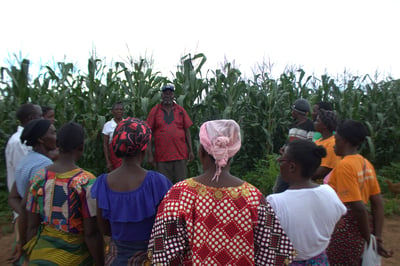 As Humana People to People, we are guided by one principle: lasting development happens when people organize, lead, and act together. Our people-to-people approach engages communities to be at the centre of change. We work with smallholder farmers, community groups, and local authorities to identify challenges, drive solutions, and build long-term resilience. Local ownership is the foundation of sustainable results.
This approach shapes our Sustainable Agriculture and Environment programs. Smallholder farmers and their families lead efforts to increase food production, protect natural resources, and adapt to climate change. Through Farmers’ Clubs and community structures, people strengthen food systems, diversify livelihoods, improve nutrition, and build resilience using local knowledge.
Small-scale farmers are central to food security and environmental stewardship. In 2025, our members reached over 1.5 million people through 503 project units across 14 countries in Africa, Asia, and Central and South America. Read more here.
Across countries where Humana People to People members are working, communities are already demonstrating what sustainable change looks like in practice.
.jpg?width=700&height=525&name=9.%20Agricultural%20production%20(2).jpg)
In Zambia, DAPP Zambia is carrying out a Drought Recovery Program in Southern Province, supporting more than 50,000 smallholder farmers affected by severe drought. Organized in Farmers’ Clubs, farmers are strengthening climate resilience through improved crop management, better water use, irrigation solutions, financial inclusion, and stronger market access. The program also connects agriculture with nutrition by sourcing school meals from local farmers and school gardens. This strengthens local economies while improving access to nutritious food for children and families.
In Kazungula District, farmer Aggrey Katapazi rebuilt his livelihood after repeated drought losses.“I lost crops to drought because I only planted maize, so I practically lost everything when the crop failed.” After joining the Mutwe Maano Farmers’ Club, he received seeds and training in improved farming methods. “I hired a water pump, planted immediately, and harvested 14 boxes of tomatoes that earned me K4,200 (USD $222.00). Now I want to buy a solar-powered water pump so I can farm throughout the year.”
His experience reflects what happens when farmers gain practical tools, collective support, and ownership over their own recovery.
In the Democratic Republic of the Congo, HPP-Congo is working with 600 smallholder farmers in Kimpese, 70 per cent of them are women, to address malnutrition and improve dietary diversity. The program combines agricultural support, nutrition education, hygiene promotion, awareness raising, and strengthened local organization.
During one food demonstration, the village chief of Viaza and a member of a Farmers’ Action Group shared the impact:
“We have lost children and adults in this village because of poor eating habits caused by a lack of information. My village was not known for eating vegetables, but now it is a different story. People are preparing food differently, eating healthier, and practicing better hygiene and sanitation. The presence of the Child Aid Kimpese project is changing the mentality of the people.”
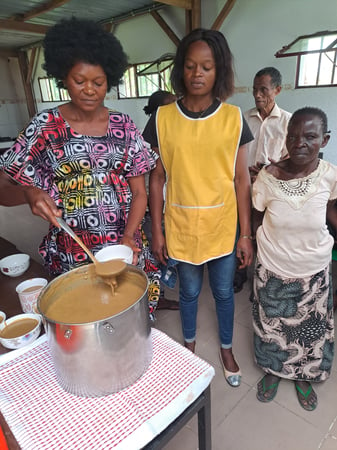
This is what people-to-people development looks like in practice: communities building knowledge together, improving food habits, strengthening local systems, and creating healthier futures. The challenges are significant, but solutions are within reach because every investment in local leadership makes systems more resilient.
This June, as we mark World Environment Day and World Food Safety Day, we are reminded that environmental sustainability, food safety, and community resilience are deeply interconnected. We need healthy ecosystems to produce safe food. We need informed and organised communities to protect both.
As Humana People to People, we will continue working alongside communities to drive sustainable solutions through collective action, practical knowledge, and local leadership. When people come together to improve their own lives and environments, change becomes lasting and development truly sustainable.